Educational Content · Women's Wellness

Your body changed. Your willpower didn't.

Collagen, satiety and lean mass shift quietly over the years — and most eating plans were never built around any of them. Here is the short version, plus the old kitchen habit women keep coming back to.

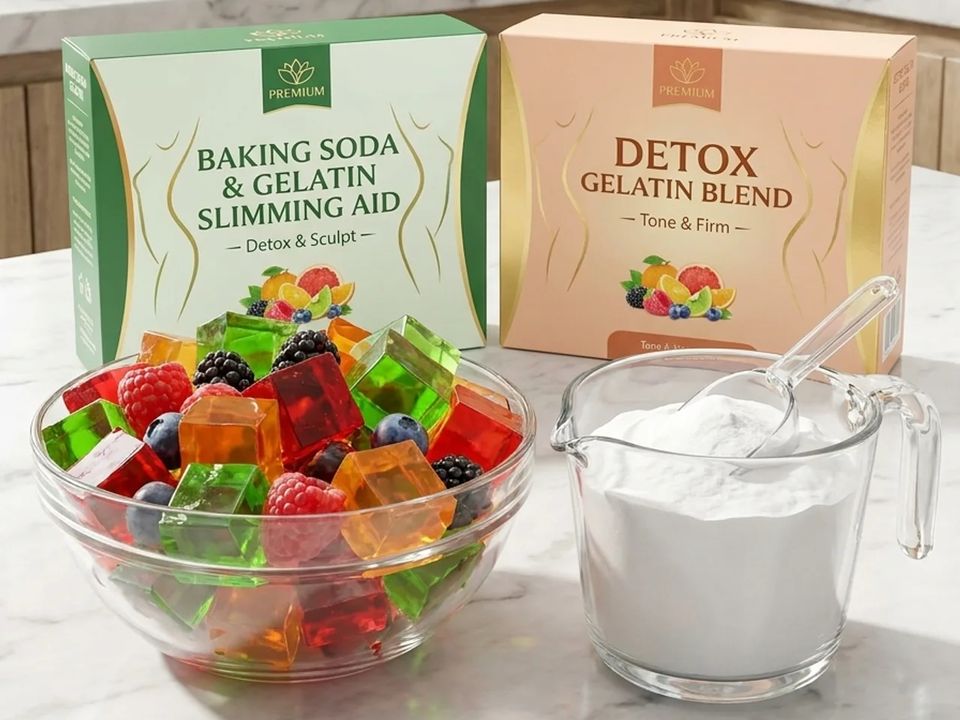
Gelatin cubes with fresh berries in a glass bowl beside a measuring cup of white powder on a marble counterFree presentationWatch the explanation — about 4 minutesWatch the free presentationEducational material. No purchase required to watch.
Written for womenPlain-language scienceNo diet rules

What's actually going on

Four changes nobody explains to women

None of these are failures of discipline. They are ordinary shifts in how a woman's body builds, signals and holds structure — and they happen whether or not you are paying attention.

01

Collagen output slows down

Collagen is the protein that gives skin, joints, hair and nails their structure. The body's own production tends to decline gradually from the mid‑twenties onward, and dietary intake of it has largely disappeared from modern cooking.

02

Satiety signals get noisier

Fullness is driven mostly by protein, fibre and meal rhythm — not by how little you eat. Low‑protein breakfasts and long gaps between meals leave the appetite signal weak, and hunger arrives back far too early.

03

Lean mass quietly shifts

Body composition can change while the number on the scale stays put. Less lean tissue means a lower resting energy use, which is why the same routine that once worked can start to feel like it stopped responding.

04

Traditional dieting fights all three

Cutting calories without protecting protein intake tends to remove the very tissue that keeps energy use and structure stable — which is why restrictive plans so often feel harder the second and third time around.


Setting the record straight

Three things women are told — and what the science actually says

Myth

"If it isn't working, eat even less."

Fact

What you keep matters as much as what you cut. Protein intake and resistance activity are what help preserve lean tissue during any change in eating, and lean tissue is a major driver of daily energy use.

Myth

"The scale tells the whole story."

Fact

A bathroom scale reports one number for water, bone, muscle and fat combined. Two women at an identical weight can have very different composition — which is why clothes can fit differently while the number refuses to move.

Myth

"A slow metabolism is just genetics."

Fact

Genetics set a range, not a verdict. Muscle mass, sleep, protein distribution across the day and everyday movement all influence how much energy the body uses — and every one of them responds to habit.


The approach

Three steps, in this order

The order matters. Each step makes the next one easier to keep — which is the whole point.

01

Rebuild the base first

Start the day with protein instead of sugar. Hydrolyzed gelatin sits comfortably here: it dissolves into coffee, tea, yogurt or water without changing the taste, which makes it one of the easiest protein sources to actually remember.

02

Steady the signals

Water before meals, fibre with meals, and a predictable rhythm between them. Nothing exotic — the goal is simply to stop asking your appetite to make decisions on an empty tank at 4 p.m.

03

Keep it small enough to repeat

A habit you can do on your worst week beats a plan that only survives your best one. Structure returns slowly and quietly, and consistency over months is what makes the difference visible.


Where it comes from

Your great‑grandmother ate collagen every week. She just called it dinner.

Long before anyone printed the word "collagen" on a package, it arrived through cooking. Bones and joints went into the pot and simmered for hours. The broth cooled and set into a soft, wobbly layer — that layer is gelatin, collagen unwound by slow heat.

It showed up everywhere: Brazilian and Portuguese kitchens with their long‑simmered stocks, French consommés and aspics, Jewish chicken soup, Asian bone broths. Nobody framed it as a supplement. It was simply what happened when nothing edible got thrown away.

Modern cooking removed the step. Stocks come from cubes, cuts arrive boneless, and meals are built for speed. The protein most connected to skin, joints and structure quietly left the everyday plate — which is precisely why it is being deliberately put back.


Worth paying attention to

Six everyday signs women tend to dismiss

These are common observations, not symptoms of any condition and not a diagnosis of anything. If something concerns you, that conversation belongs with your doctor.

⚠️

Hunger returns within the hour

You finished a real meal, and appetite is already back — a pattern often tied to low protein and fibre at that meal.

⚠️

Skin feels less springy

Less bounce, more visible lines around the eyes and mouth, and a texture that doesn't quite recover overnight the way it used to.

⚠️

Joints are noisy in the morning

Knees and hips that need a few minutes to loosen up — especially on the first stairs of the day.

⚠️

Same number, different fit

The scale hasn't moved, but the same jeans sit differently. That's composition talking, not weight.

⚠️

The 3 p.m. collapse

Energy drops sharply mid‑afternoon and the search for something sweet begins — often traceable to how breakfast was built.

⚠️

Nails split, hair feels thinner

Nails that peel or break early and hair with less body — both made of structural proteins that depend on daily supply.

Recognising a few of these is common and does not indicate a deficiency, illness or diagnosis of any kind.


Illustrative examples

What this habit looks like in a normal week

The accounts below are written illustrations created for this page — composite examples of how the routine fits into everyday life. They are not reports from identified customers.

The part that surprised me was how unremarkable it is. A spoonful goes into my morning coffee and dissolves — no taste, no texture, nothing to plan around. Three months later it's simply part of getting the kettle on, which is the only reason I've kept it.

Clara M.
Illustrative example
Composite — not an actual customer

I'd spent years cutting things out and being annoyed at myself when it didn't hold. Adding one thing instead of removing five was a completely different experience. Breakfast finally carries me to lunch without the 11 a.m. raid on the biscuit tin.

Renata S.
Illustrative example
Composite — not an actual customer

My scale is stubborn and I've made peace with that. What I do notice is the fit of things and how my knees behave on the stairs first thing. It's slow and undramatic, and honestly at this point I prefer that to another six‑week plan.

Beatriz L.
Illustrative example
Composite — not an actual customer

Individual results may vary. These narratives are illustrative compositions created for educational purposes and do not describe identified individuals, guarantee any outcome, or represent typical results. Nothing here should be taken as a promise of any specific result.


Questions women ask

Frequently asked questions

Gelatin is collagen that has been unwound by heat — the same substance that makes a cooled broth set. "Hydrolyzed" means it has been broken down further into much shorter chains, so it dissolves cleanly in cold or hot liquid and no longer forms a gel. Practically, that means it can go into water, coffee, tea, soup or yogurt without changing the texture, and it is generally easier on digestion than standard gelatin.
They are stages of the same protein. Collagen is the intact structural protein; gelatin is collagen after heat has unwound it; hydrolyzed gelatin (often sold as collagen peptides) is gelatin cut into smaller fragments. The amino acid profile is essentially the same across all three — what changes is how the body has to break it down and how it behaves in a glass.
No. This page is educational content about collagen, protein and daily habits — not a diet, not a treatment and not a weight‑loss protocol. There are no rules to follow, no restrictions prescribed and no outcome being promised. Any decision about your eating, exercise or health belongs with you and a qualified healthcare professional.
Absolutely — and that is precisely how it was eaten for centuries. Slow‑simmered bone broth, stocks made from joints and bones, and cuts cooked on the bone all deliver it. The obstacle is rarely knowledge and almost always time: a proper stock takes hours, whereas a spoonful stirred into a drink takes seconds. That convenience gap is the entire reason powders exist.
Most people attach it to something they already do without thinking — morning coffee or tea being the most common anchor. Time of day matters far less than repetition. Habits that hitch a ride on an existing routine survive; habits that require a new decision every morning usually don't.
No. Gelatin and collagen are animal‑derived by definition — there is no true plant version, because plants do not produce collagen. Products marketed as "vegan collagen" are generally builder blends of amino acids and vitamins intended to support the body's own production, which is a different thing. If you avoid animal products, this is not the right fit for you.
Yes — and especially if you are pregnant or nursing, managing a kidney or liver condition, taking prescription medication, or living with any diagnosed health condition. Nothing on this page is medical advice, and no content here is intended to diagnose, treat, cure or prevent any disease. Your doctor knows your history; a web page does not.

The full explanation

See how the habit fits into an ordinary morning

A short presentation walking through what collagen does, why satiety and lean mass matter more than the number on the scale, and how women are quietly bringing an old kitchen staple back to the table.

Watch the free presentationEducational material · No purchase required to watch